Stainless steel is prized across industrial manufacturing, food processing, medical hardware, and architectural fabrication for its high tensile strength and superior corrosion resistance. However, these same metallurgical properties make cutting stainless steel sheets challenging. Achieving burr-free edges, precise hole profiles, and zero oxide discoloration requires high-power fiber laser technology, precise thermal management, and specialized assist gases.
Stainless steel alloys contain chromium, nickel, and other alloying elements that increase toughness and thermal resistance compared to standard mild steel.
When subjected to thermal cutting, stainless steel retains heat near the cut zone rather than dissipating it quickly. Excessive heat buildup can cause localized discoloration, material warping, or micro-cracking. Furthermore, exposing hot stainless steel to atmospheric oxygen creates an oxide layer along the cut edge, which ruins aesthetics and compromises corrosion resistance if not controlled.
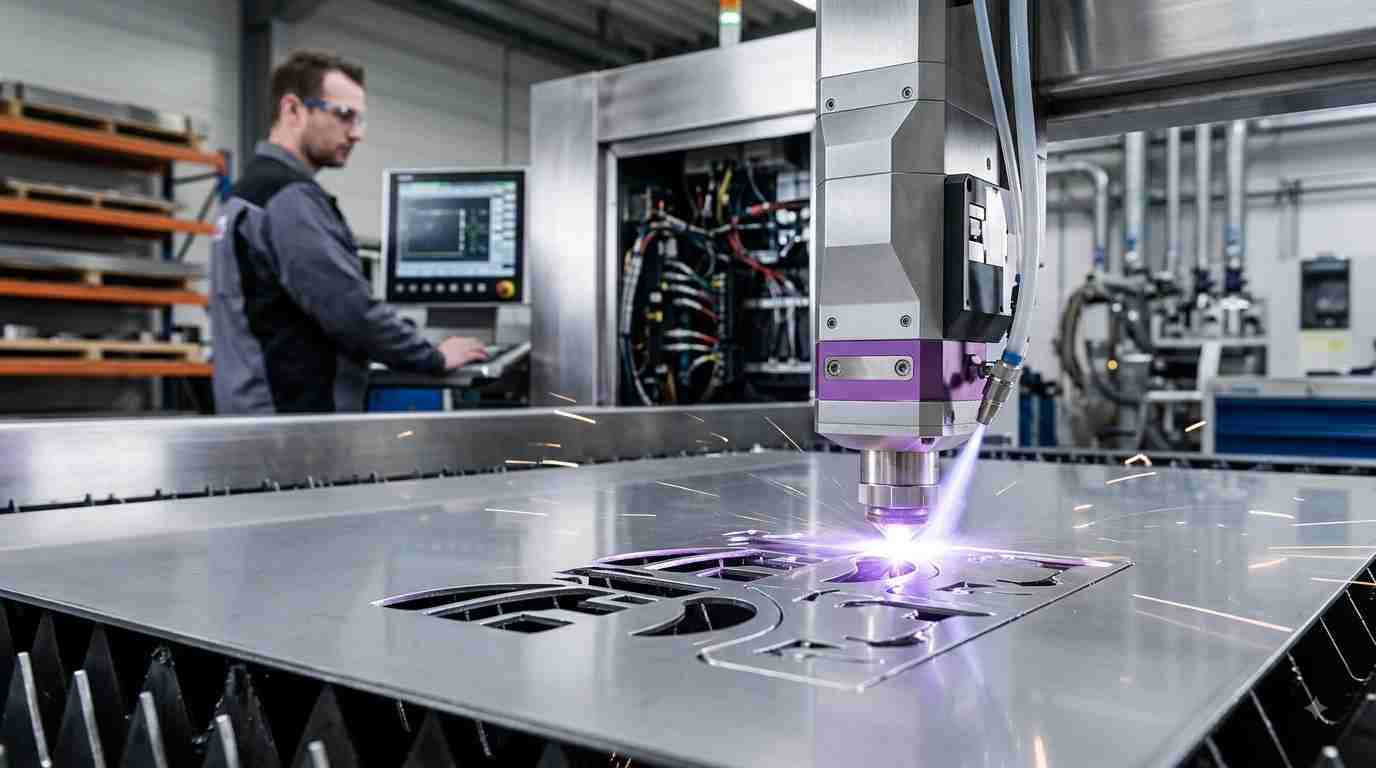
Modern high-power fiber laser systems provide the most efficient solution for cutting stainless steel sheets. Fiber lasers produce a concentrated beam with high energy density, allowing rapid melting and vaporizing of the metal along a narrow kerf width.
To maintain pristine edge quality, precision fiber lasers utilize high-pressure nitrogen assist gas during the cutting process:
Oxide-Free Edges: Nitrogen acts as an inert shielding gas that displaces oxygen from the cutting zone. This prevents oxidation, leaving a bright, silver-colored edge ready for welding or painting without secondary grinding.
Effective Dross Ejection: High-pressure nitrogen blows the molten metal cleanly out of the bottom of the cut path, eliminating dross (burrs) along the underside of the sheet.
Thermal Control: The continuous flow of pressurized gas helps cool the immediate cut boundary, restricting thermal spread.
The Heat-Affected Zone (HAZ) refers to the area of base metal whose microstructure and chemical properties are altered by high cutting temperatures. In stainless steel, excessive HAZ can cause "sensitization"—a process where chromium carbides precipitate along grain boundaries, reducing localized corrosion resistance.
High-speed fiber laser cutting minimizes the HAZ by concentrating thermal energy into a microscopic focal spot and moving rapidly across the sheet. By reducing total heat input, the base metal retains its original grain structure and anti-corrosive properties right up to the cut boundary.
Adjusting laser cutting parameters according to specific stainless steel grades ensures optimal production output:
Austenitic Grades (304 and 316): Highly popular for food-grade equipment and chemical processing. They offer excellent laser absorption, producing smooth edges when cut with high-pressure nitrogen.
Ferritic & Martensitic Grades (430, 410): Magnetic alloys that require precise focal position adjustments to avoid excessive thermal stress during rapid pulse cutting.
DFM Guidelines for Stainless Sheet Processing
To optimize sheet utilization, design engineers should maintain hole diameters at least equal to or greater than the sheet thickness. Additionally, keeping cutouts away from sheet edges prevents thermal bowing during high-speed laser runs.
When fabricating critical enclosures, structural panels, or custom components, choosing an experienced vendor for precision SS sheet metal cutting services for industrial applications ensures tight tolerances, oxidation-free edges, and minimal material waste.